ACLJ Takes First Amendment Case to the Supreme Court To Defend Former Trump Lawyer and Professor John Eastman From Disbarment
Listen tothis article
Shortly after our personal representation of President Trump in his impeachment acquittal before the U.S. Senate, we warned about what we saw coming. The Left was preparing to go after conservative lawyers. Now that unfortunately has come to pass, and it’s exactly what the ACLJ is preparing to challenge at the U.S. Supreme Court.
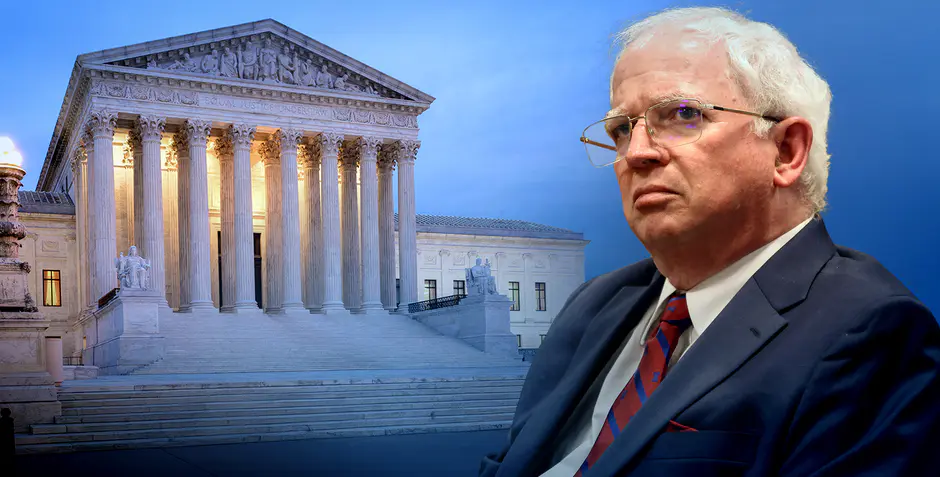
The ACLJ is representing Professor John Eastman, a former Trump attorney, in a forthcoming cert petition to the Supreme Court of the United States challenging his disbarment by the state of California.
In the wake of the 2020 election, Professor Eastman, a constitutional scholar and former law school dean, represented President Trump in a number of election-related challenges involving issues of first impression upon which no court had weighed in. He was thereafter disbarred by the California Bar following disciplinary proceedings arising from his legal advice, public advocacy, court filings, and speeches regarding the 2020 presidential election. That decision was erroneously upheld by the California Supreme Court.
No court sanctioned Professor Eastman for any of his legal positions, yet the California Bar disbarred him anyway. In essence, Professor Eastman was disbarred for exercising his free speech rights and providing legal counsel to President Trump in the aftermath of the election.
Take action with the ACLJ. Sign the petition: Stop the Left From Disbarring Conservatives.
If a state can disbar a conservative attorney for his advocacy – his free speech – by retroactively labeling that advocacy as professional misconduct, then the Left will be empowered to wage lawfare against every conservative attorney with whom they disagree.
The question that we will now bring before the Supreme Court is whether the First Amendment prohibits the government from imposing professional discipline on an attorney for advancing legal arguments on disputed constitutional questions, regardless of how those arguments are ultimately received by a court.
Our legal system depends on lawyers who are willing to advocate for their clients, test the boundaries of existing law, and present arguments that courts may ultimately accept or reject. Throughout our nation’s history, many legal theories that were initially dismissed eventually became accepted constitutional doctrine. Constitutional law develops through advocacy, disagreement, and judicial decision-making – not through governmental punishment of attorneys because their legal positions prove controversial or unpopular.
That principle is especially important when the underlying issues involve core political speech and constitutional debate. The First Amendment exists to protect robust discussion on matters of public concern, including questions about the meaning and application of the Constitution itself.
The Supreme Court has long recognized that attorneys do not surrender their constitutional rights by virtue of their profession.
One of the core principles that undergirds our constitutional legal system is that everyone is entitled to their choice of representation – someone who will zealously defend their client. In fact, every state bar in the country has ethical rules requiring attorneys to advocate zealously or diligently on behalf of their clients within the bounds of the law.
Yet Professor Eastman was disbarred even though no court had sanctioned him for the advocacy at issue or found that he had engaged in sanctionable litigation misconduct. To punish an attorney for exploring novel legal theories and pursuing every potentially meritorious argument on behalf of a client – simply because others disagree with the advice given or the legal positions advanced – is a dangerous indictment of our legal system.
The implications extend far beyond Professor Eastman. Every attorney who represents a controversial client, advances a novel constitutional theory, or challenges prevailing legal orthodoxy has an interest in ensuring that professional discipline is not used to chill protected advocacy. Today’s unpopular argument may become tomorrow’s accepted precedent. The Constitution protects the freedom to make those arguments in the first place.
If conservative lawyers lose their free speech rights, our constitutional system of law is doomed. We’re fighting to make sure that doesn’t happen.
For decades, the ACLJ has defended the freedoms guaranteed by the First Amendment before the Supreme Court of the United States. We are proud to represent Professor Eastman as we ask the Court to address these important constitutional questions and to reaffirm the vital role that free speech and vigorous legal advocacy play in our constitutional system.
Our petition is due on September 11, and we look forward to presenting these important First Amendment issues to the Court.
Take action with the ACLJ. Sign the petition: Stop the Left From Disbarring Conservatives.