ACLJ Files Amicus Brief at Supreme Court Defending Church’s’ Right to Preserve Faith in School Admissions
Listen tothis article
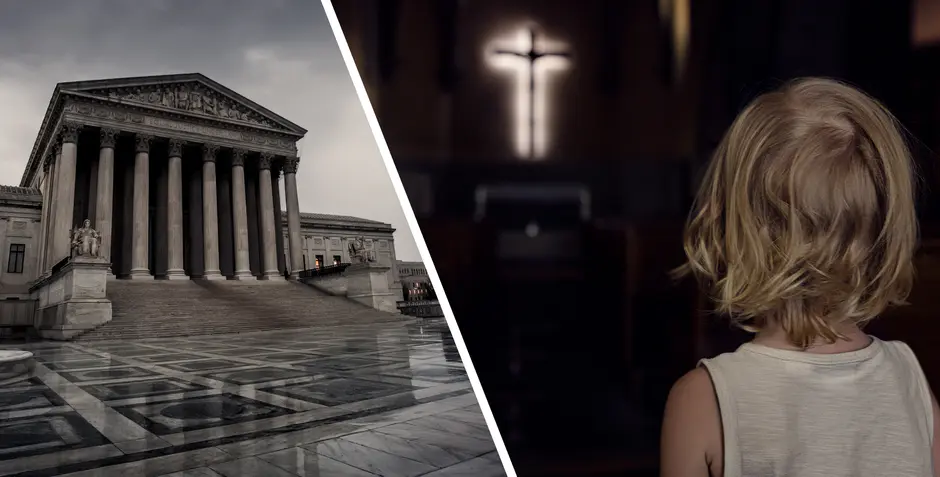
Can the government tell a Church how to serve their members – even pressuring them to bypass issues related to faith? That is precisely what the state of Colorado is telling St. Mary Catholic Parish. Last week, the ACLJ filed an amicus brief at the U.S. Supreme Court explaining why that scheme is unconstitutional.
St. Mary Catholic Parish in Littleton, Colorado, and St. Bernadette Catholic Parish in Lakewood, Colorado, wanted to participate in Colorado’s Universal Preschool Program (UPK) – a generally available, taxpayer-funded benefit open to all preschools. But there was a huge condition: They would have to abandon their preference for admitting children from Christian families and surrender their ability to maintain a religious learning environment consistent with Church teaching.
Here’s the catch: Colorado’s own preschool-matching algorithm allows providers to use all kinds of preferences to shape their admissions – geographic boundaries, sibling placement, employee children, language needs, membership in a co-op, even generalized “community” or “interest” ties. Originally, the list included a congregational preference too. But the state later stripped that one out – and only that one.
Sign our petition: Defeat Newsom’s War on the Church at the Supreme Court.
A federal district court sided with the churches, but a unanimous panel of the Tenth Circuit reversed, holding that Colorado’s rule was “neutral and generally applicable” and therefore only had to survive toothless rational-basis review – the lowest, easiest legal test to survive. The Supreme Court granted certiorari, agreeing to decide when a lack of a religious exemption, amid a host of secular ones, triggers the Constitution’s most searching form of judicial review: strict scrutiny.
The ACLJ filed jointly with Advocates for Faith & Freedom, Calvary Chapel San Jose, and Pastor Mike McClure – and that partnership is no coincidence. Calvary Chapel San Jose and Pastor McClure, represented by ACLJ and Advocates for Faith & Freedom attorneys, are themselves petitioners in a separate case now pending before the Supreme Court, Calvary Chapel San Jose v. California (in which we’re defending a church that Gov. Gavin Newsom is trying to fine for how it worshiped), which raises the very same question of when a government exemption scheme triggers strict scrutiny under the Free Exercise Clause.
That means the outcome here will directly shape the fate of Calvary Chapel’s own case – and, by extension, the free-exercise rights of churches and ministries across the country facing similar “neutral” rules that quietly disadvantage religious choices. This brief is not just about two church preschools in Colorado. It’s about ensuring the legal rule that will decide Calvary Chapel’s case – and countless others like it – is built on solid constitutional ground.
This is not a technical dispute about preschool logistics. It goes to the heart of what the Free Exercise Clause protects: the ability of religious institutions to remain religious while participating in public life on equal terms. As our brief explains, the Supreme Court’s own precedents – from Trinity Lutheran to Fulton v. City of Philadelphia– make clear that whenever a government program treats any comparable secular activity more favorably than religious exercise, strict scrutiny applies.
Colorado’s preschool rules do exactly that. A preschool may prefer a child because their sibling already attends, or because their family works there, or because they share a “specific interest” – but a Christian school may not prefer a child from a Christian family. That is not neutrality. That is discrimination against religion, dressed up as an administrative preference system.
The stakes reach further still. Our brief highlights that the Supreme Court has repeatedly recognized that religious schools do not merely teach; they form souls. Preserving a coherent religious community is not incidental to that mission; it is essential to it. Strip a Christian school of the ability to prioritize Christian families, and you strip it of the very thing that makes it Christian.
Our brief also confronts a troubling precedent, Christian Legal Society v. Martinez, which Colorado leans on to justify conditioning public benefits on religious groups abandoning their identity. We argue that the previous decision is deeply out of step with the Court’s broader religious-liberty jurisprudence and should, at a minimum, be confined narrowly to its facts – not stretched to let states force religious schools to choose between their faith and a generally available public benefit.
If Colorado’s approach stands, it becomes a blueprint for states nationwide to squeeze religious schools, churches, and ministries out of public programs simply by drafting “neutral” rules that quietly disfavor faith. Religious liberty does not mean the freedom to believe privately while surrendering your convictions publicly. It means the freedom to live out your faith, even – especially – when the government would rather you didn’t.
Take action with us. Sign our petition: Defeat Newsom’s War on the Church at the Supreme Court.