Operation Epic Fury Is About More Than Just Iran
Listen tothis article
For the past 47 years, conventional wisdom has held that we just needed to tolerate or manage the threat from Iran.
No more.
In less than two weeks, the joint U.S.-Israeli military operation has made extraordinary progress toward achieving the Trump Administration’s three key objectives: to destroy Iran’s ballistic missile program; prevent the regime from obtaining a nuclear weapon; and end Iran’s support for military proxy networks.
Roughly two-thirds of Iran’s ballistic missile launchers have been destroyed, and between one-third and one-half of Iran’s prewar ballistic missile arsenal has been eliminated. The U.S. has targeted or destroyed more than 60 Iranian ships, and it has sunk the Iranian frigate IRIS Dena via submarine torpedo – the first such naval kill since World War II. And of course, the senior leadership of the Islamic Republic has been decapitated, including the late Ayatollah Khamenei – a devastating blow to the regime’s organizational capacity and prestige.
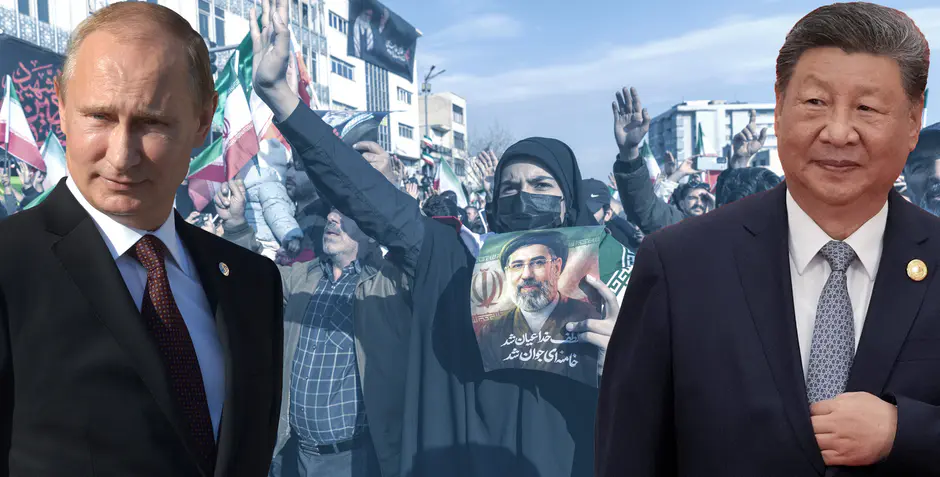
But this mission is about more than just crushing the military capabilities of a single American adversary; Operation Epic Fury is inextricably linked to the broader confrontation between the U.S. and the Beijing-led authoritarian axis that includes Russia, Iran, and other anti-American dictatorships. These dictatorships have forged military, economic, and diplomatic partnerships to shore up each other’s economies, evade sanctions, supply military materiel, project power, and undermine the position of the U.S. and our allies around the world. (It’s no mistake that Iran was supplying Russia with the drones it has been using to kill Ukrainian civilians for the past four years – and in one of history’s neat twists, Ukraine is now offering to share its expertise in countering drone warfare with the Gulf States under attack by Iran.) The decisive defeat of the Islamic Republic will damage that partnership and deter bad actors from future acts of aggression.
Operation Epic Fury has already dealt a serious blow to the Chinese Communist Party, which is watching its number-one adversary destroy the military and industrial capacity of its primary outpost of influence in the Middle East. It has already been set back materially, with the war disrupting the flow of the Iranian crude that has helped power China’s economy; and if a new government representing the will of the Iranian people comes to power, that gravy train will likely end for good. The entire world has watched as Chinese and Russian military technology has utterly failed against U.S. forces – a spectacle that’s both humiliating and bad for business. And America is also demonstrating our extraordinary military prowess and willingness to use power where necessary – a most unwelcome development from Beijing’s perspective.
Russia is benefiting from the spike in oil prices caused by the outbreak of hostilities – for now. But when the U.S. topples the Islamic Republic’s capabilities, it will seriously damage Putin’s geopolitical project. Putin already lost a key beachhead for regional influence with the collapse of the Assad regime; the defeat of the Islamic Republic would deliver a crushing blow to Russia’s ability to project power in the Middle East.
Take action with the ACLJ. Sign the petition: Stop the Sabotage. Let Trump Defend America.
But in order to prevail, we need to get this right in Iran. If we don’t see this through, and instead make some kind of deal with the remnants of the current regime, we’ll not only undercut the strategic purpose of Operation Epic Fury; we’ll be telegraphing to our adversaries that America will only go so far when it comes to securing its interests.
In the realm of geopolitics, nothing happens in a vacuum. Vladimir Putin’s decisions to invade Ukraine – first under the Obama Administration in 2014, and then as a full-scale invasion under the Biden presidency in 2022 – were calculated moves made in response to perceived U.S. weakness. In 2022, Putin considered the bungled withdrawal from Afghanistan and the lack of action taken in response to his threats to Ukraine, and decided the time was ripe to strike. Similarly, Xi Jinping has been watching carefully for an opportunity to fulfill his dream of reclaiming Taiwan.
America’s actions against Iran have already gone a long way toward restoring the deterrence lost under the Obama and Biden presidencies. If we can decisively defeat the Islamic Republic, we will have rid the world of one of the most dangerous, destabilizing, and truly vile regimes of the past half-century; defeated a key American enemy; and put our adversaries on notice. But if we don’t see this operation through to the end, our hard-won gains could be undercut by the weakness and inconstancy we telegraph to the world – and bad actors will respond accordingly.