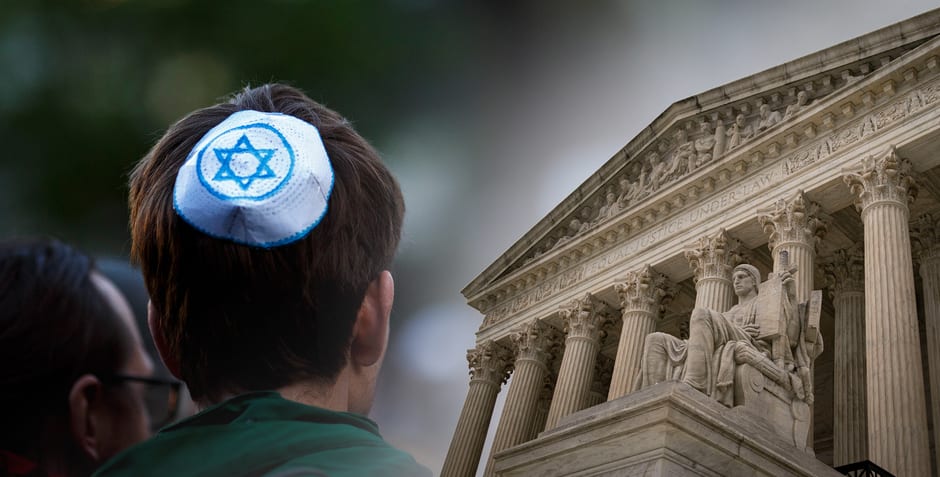
ACLJ Urges Supreme Court to Restore Title VI Protections for Students Facing Antisemitism at MIT
Listen tothis article
The ACLJ has filed a major amicus brief at the United States Supreme Court in support of Jewish students after they experienced heinous antisemitism on the campus of Massachusetts Institute of Technology (MIT). Our brief urges the High Court to review a deeply troubling decision from the First Circuit that completely undermines Title VI of the Civil Rights Act and threatens students of all ethnic backgrounds at universities across the nation.
This is not the first time the ACLJ has weighed in on this case. Last year, when the case was in the First Circuit, we filed an amicus brief warning of the dangerous consequences that would follow if universities were permitted to evade accountability for discrimination and harassment that occurs on their campus.
As we previously discussed, the case arose from Jewish MIT students who were subjected to severe antisemitic harassment and discrimination during campus protests following the October 7 attacks in Israel. Pro-Palestinian protesters blocked Jewish students from accessing portions of campus, targeted them because of their actual or perceived connection to Israel, and created an environment that left many students feeling threatened and unsafe. Yet, the First Circuit concluded that MIT’s minimal response was sufficient to avoid Title VI liability.
In our brief, the ACLJ argues that the First Circuit’s decision drastically weakens Title VI protections by allowing universities to avoid liability through delayed, inadequate, and minimal responses to known discrimination. The decision effectively creates a roadmap for educational institutions to escape accountability while minority students continue to face exclusion, intimidation, and unequal access to educational opportunities.
At the center of this case is Title VI of the Civil Rights Act of 1964, which guarantees that students at federally funded universities are not denied equal access to educational opportunities because of their race, ethnicity, ancestry, or national origin. The Supreme Court has held that schools are liable when they are “deliberately indifferent” to harassment that is "so severe, pervasive, and objectively offensive" that it creates a hostile environment that effectively denies victims equal access to education. Our brief argues that the First Circuit departed from that principle by allowing MIT to escape liability despite allegations that Jewish students faced exclusion, intimidation, and a hostile campus environment while the university's response failed to remedy the discrimination.
But the dangers extend even further.
Our brief also explains why the First Circuit’s First Amendment analysis is dangerous. The court effectively assumed that because the conduct at issue was connected to a political cause, it could not also constitute actionable discrimination under Title VI. As our brief clarifies, students remain free to debate controversial political issues, yet universities remain obligated to protect students from conduct that creates a hostile educational environment. The First Circuit blurred that distinction by treating harassment and exclusion directed at Jewish students as protected political advocacy rather than evaluating whether the conduct was “so severe, pervasive, and objectively offensive” that it deprived students of equal access to education. Under such a framework, schools could fail to address serious harassment directed at any minority group so long as the perpetrators characterize their conduct as political expression.
The rise of antisemitism on college campuses has exposed serious failures by many academic institutions to protect Jewish students. The Supreme Court now has an opportunity to correct the First Circuit’s harmful decision and restore Title VI’s critical safeguards. Take action with the ACLJ to end discrimination against Jewish students: Sign our petition.
If you are a student that experienced similar discrimination, please contact us at ACLJ.org.